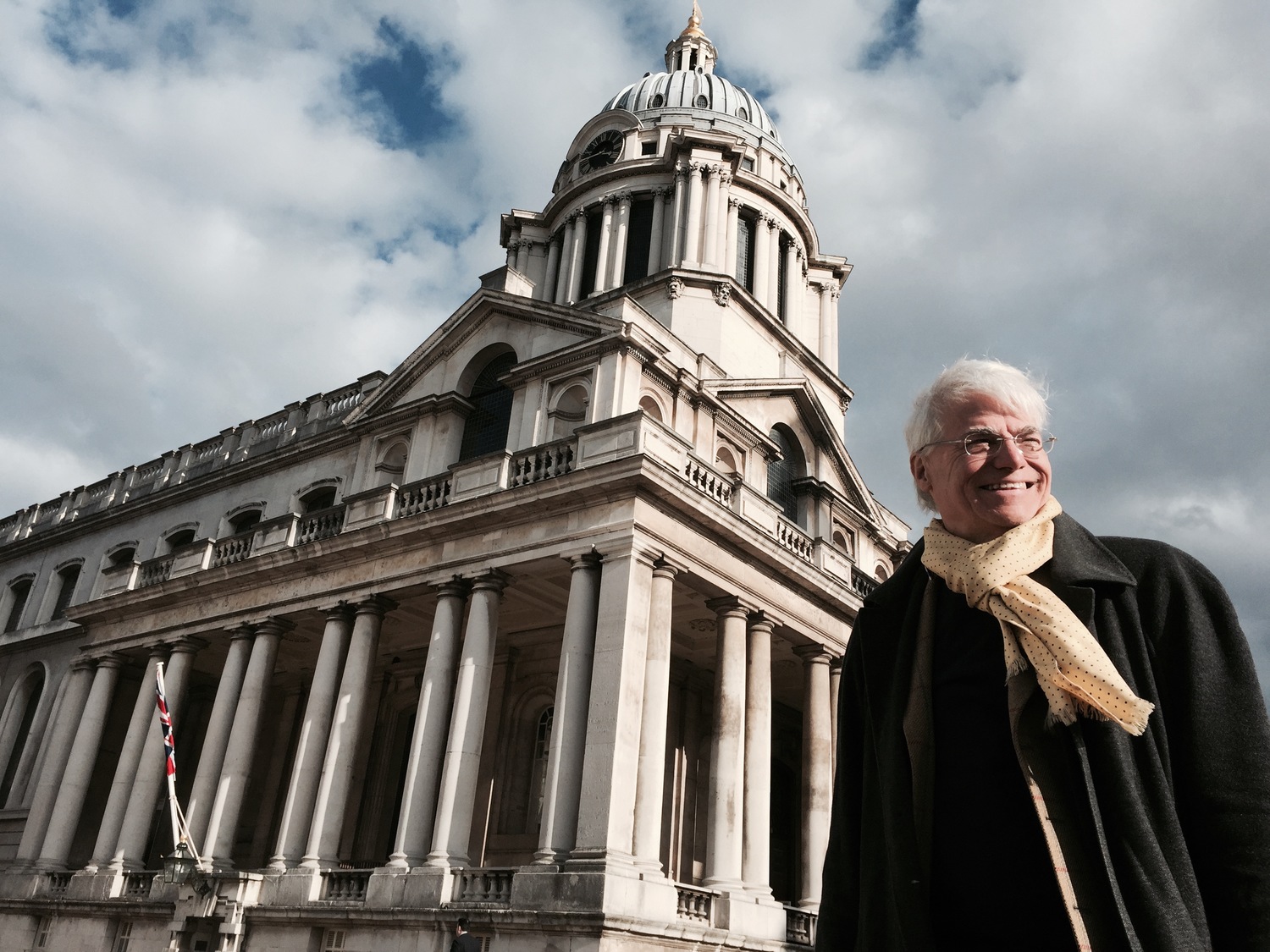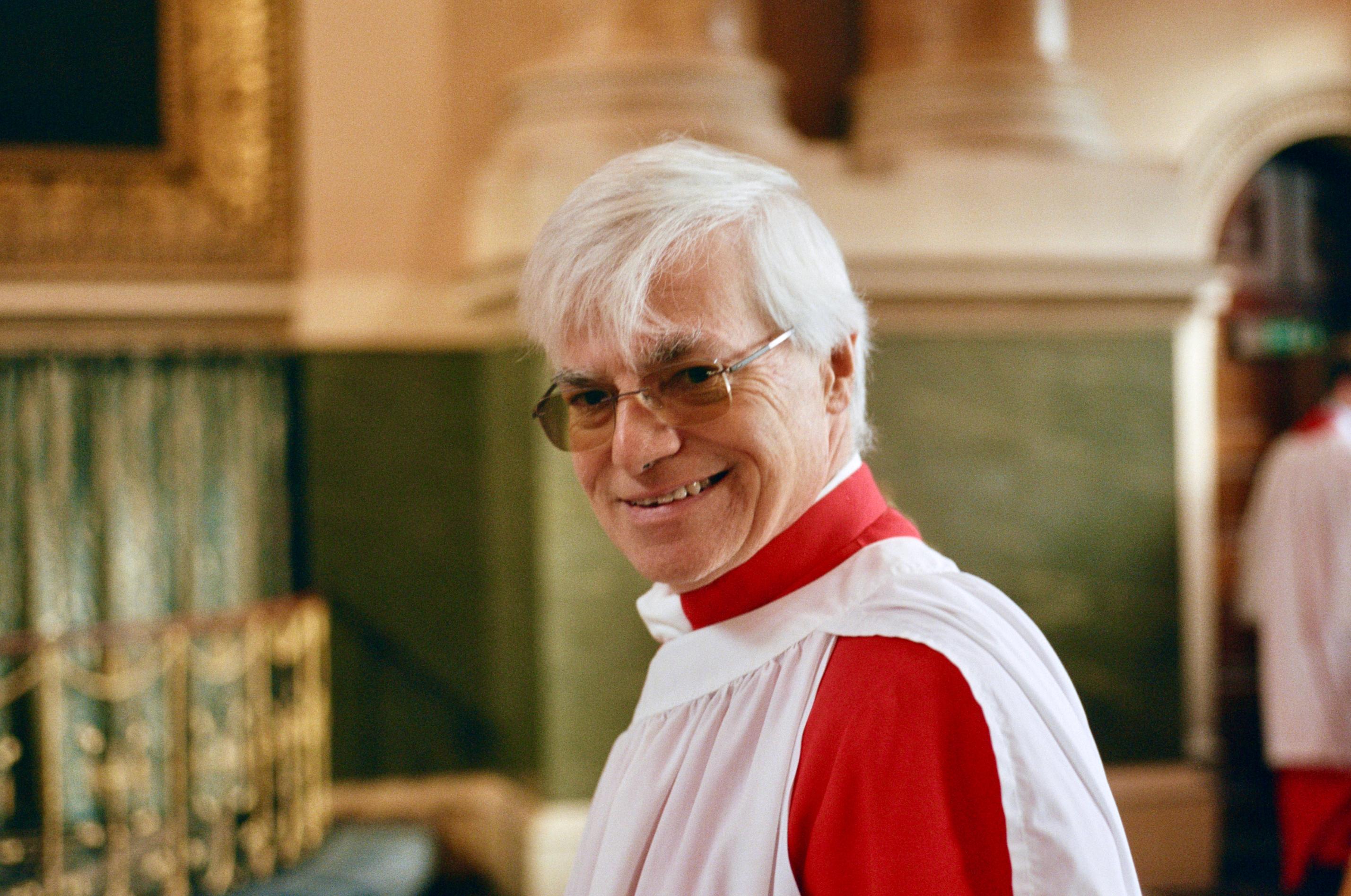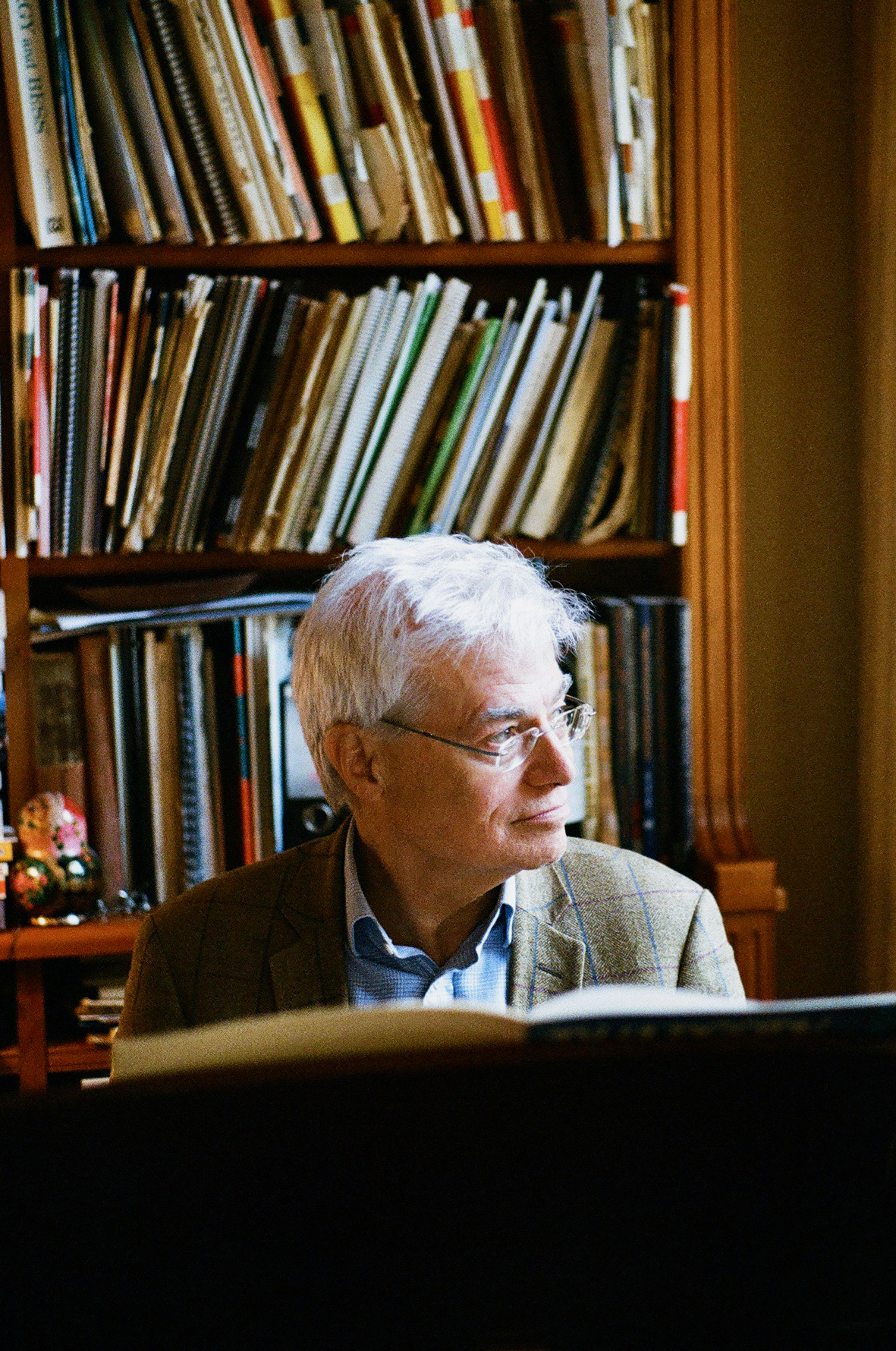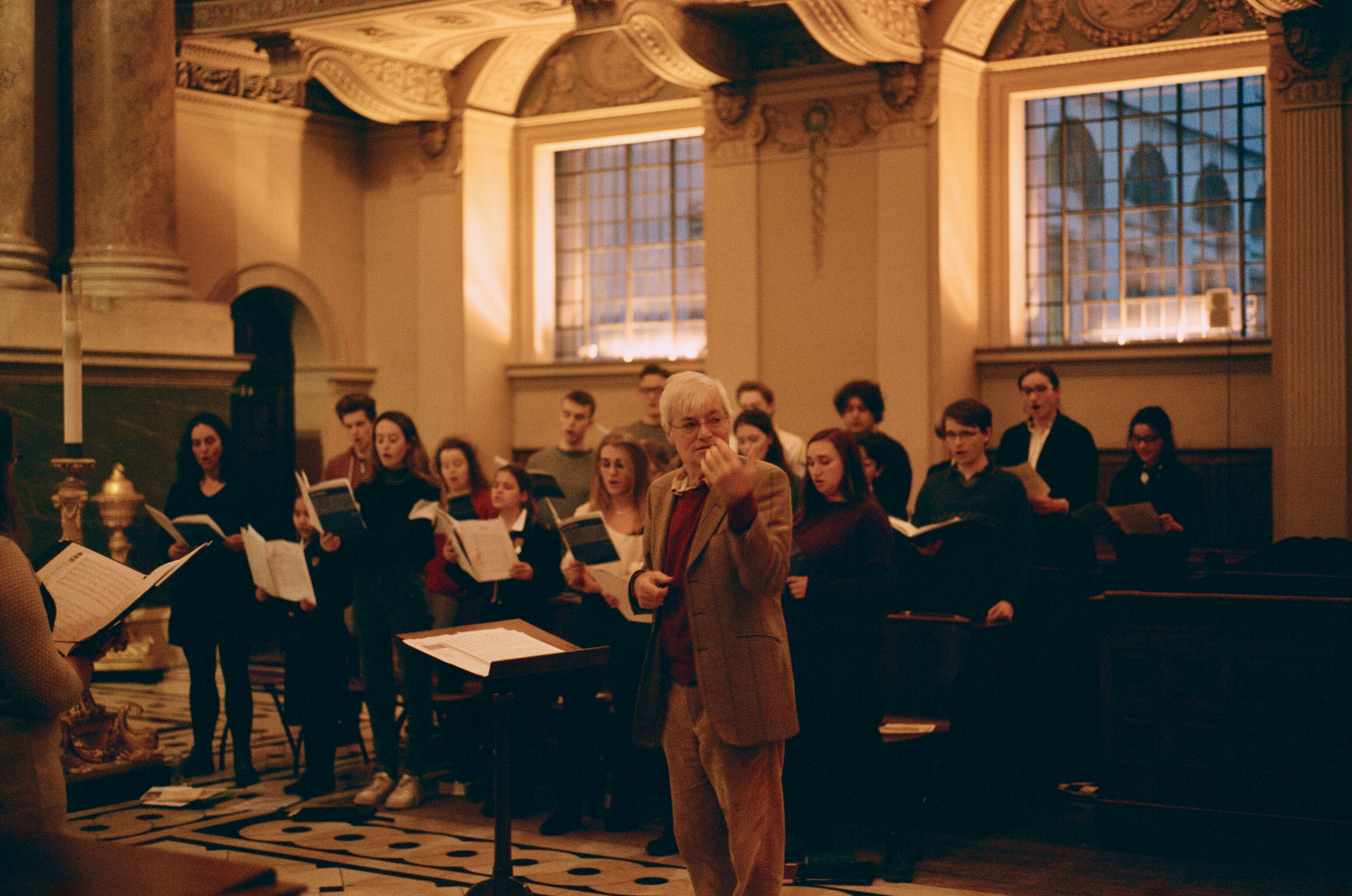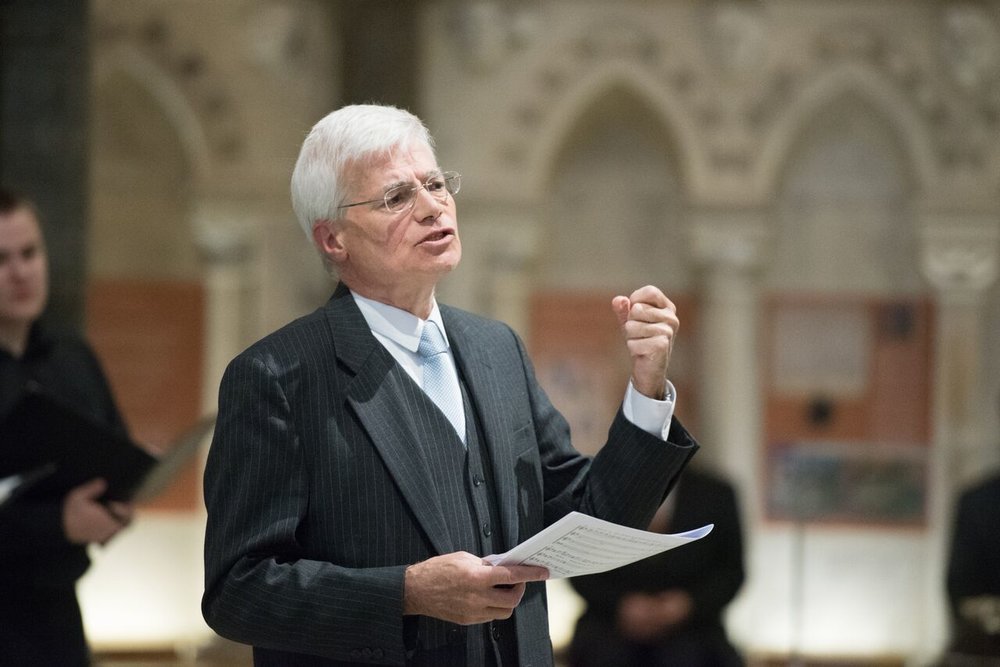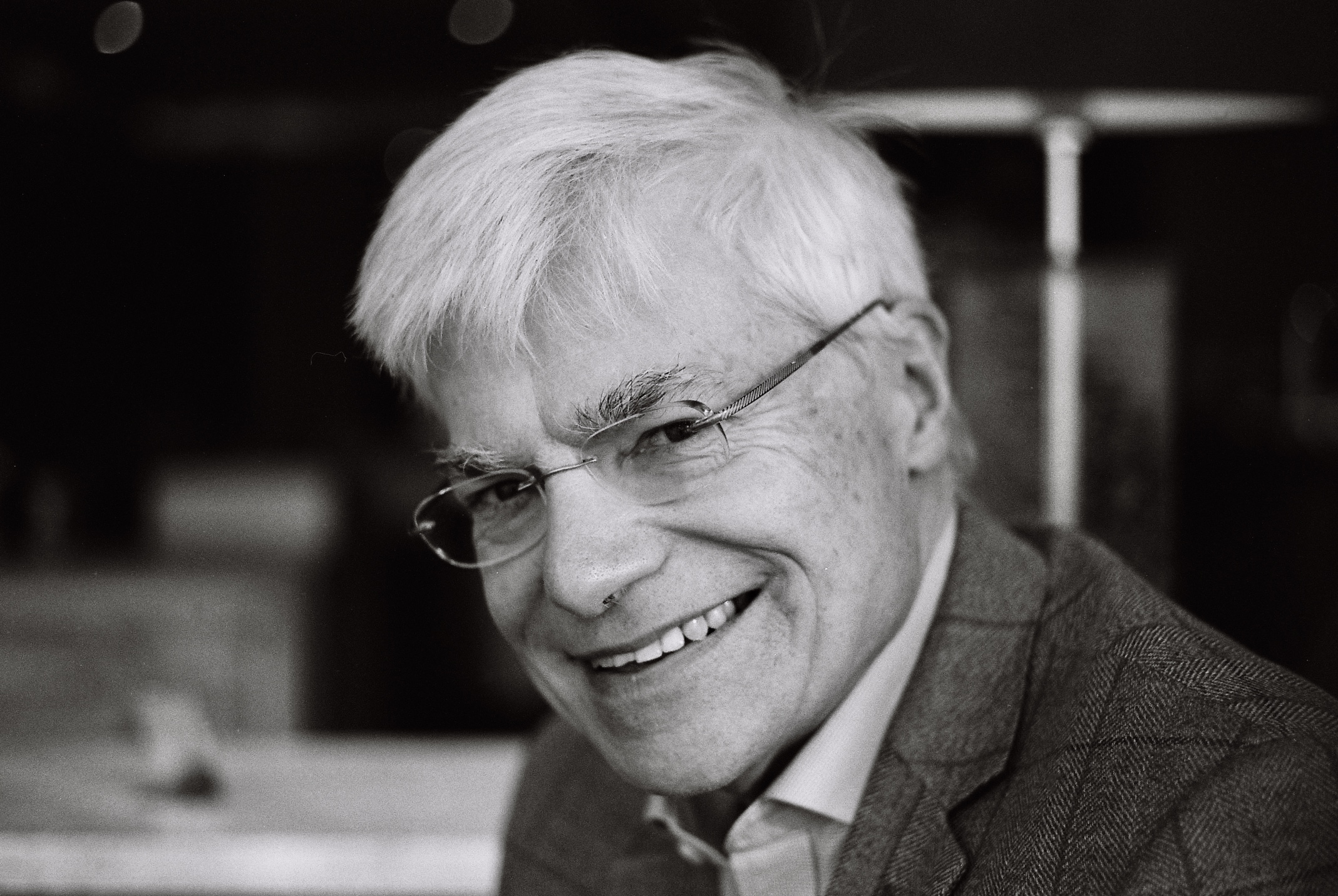
Ralph Allwood MBE DMus was for 26 years Director of Music at Eton College and is now a freelance choral director, teacher and conductor. He is the Director of the Rodolfus (ex-Eton) Choral Courses, which he founded in 1980. He co-founded the Junior Choral Courses in 2012. Ten thousand 8 to 20 year-olds have since been students on courses. In recent years he has launched courses in Texas, Shanghai and Shenzhen. The Rodolfus choir has produced over 20 CDs since he founded it in 1982.
Ralph is co-founder and conductor of Inner Voices, made up of singers from state schools in London. He is also a Supervisor for harmony at Jesus College, Cambridge, Director of the only conservatoire chapel choir in the world, the Old Royal Naval College Trinity Laban Chapel Choir and an Honorary Fellow of University College, Durham.
Ralph has conducted choirs for over 40 broadcasts for BBC Radio 3. He has composed much music for Extreme Music Ltd, heard worldwide on radio, films and television. He teaches at his old grammar school, Tiffin and is a co-founder of the National Youth Music Theatre.
In 2015 he co-founded the Pimlico Musical Foundation to enable children from Pimlico Primary Schools to sing in choirs, particularly at St Gabriel's Church.
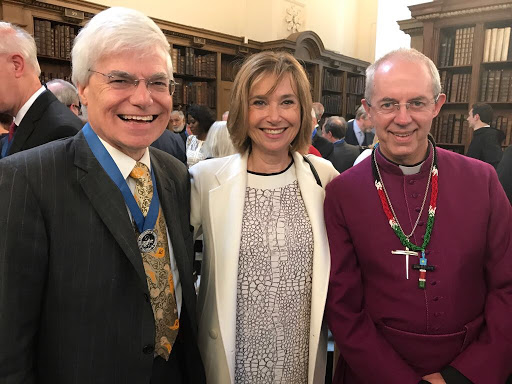
In 2017, the Archbishop of Canterbury presented him with the Thomas Cranmer Award for Music and Worship and he is Chair of the Choral Evensong Trust.
Ralph is co-founder and conductor of Inner Voices, made up of singers from state schools in London. He is also a Supervisor for harmony at Jesus College, Cambridge, Director of the only conservatoire chapel choir in the world, the Old Royal Naval College Trinity Laban Chapel Choir and an Honorary Fellow of University College, Durham.
Ralph has conducted choirs for over 40 broadcasts for BBC Radio 3. He has composed much music for Extreme Music Ltd, heard worldwide on radio, films and television. He teaches at his old grammar school, Tiffin and is a co-founder of the National Youth Music Theatre.
In 2015 he co-founded the Pimlico Musical Foundation to enable children from Pimlico Primary Schools to sing in choirs, particularly at St Gabriel's Church.
In 2017, the Archbishop of Canterbury presented him with the Thomas Cranmer Award for Music and Worship and he is Chair of the Choral Evensong Trust.
Events
Adults Choral Course
Following the success of the inaugural course in 2023, Ralph can’t wait to keep singing with you all. The course will rehearse at Holy Sepulchre, The National Musicians' Church in Holborn and singing services at Southwark Cathedral and Old Royal Naval College Chapel in Greenwich. There are no auditions - all voices and abilities are more than welcome! Music will be sent out before the course.
https://www.therodolfusfoundation.org.uk/adult-choral-course
11th - 14th April, 2024
London
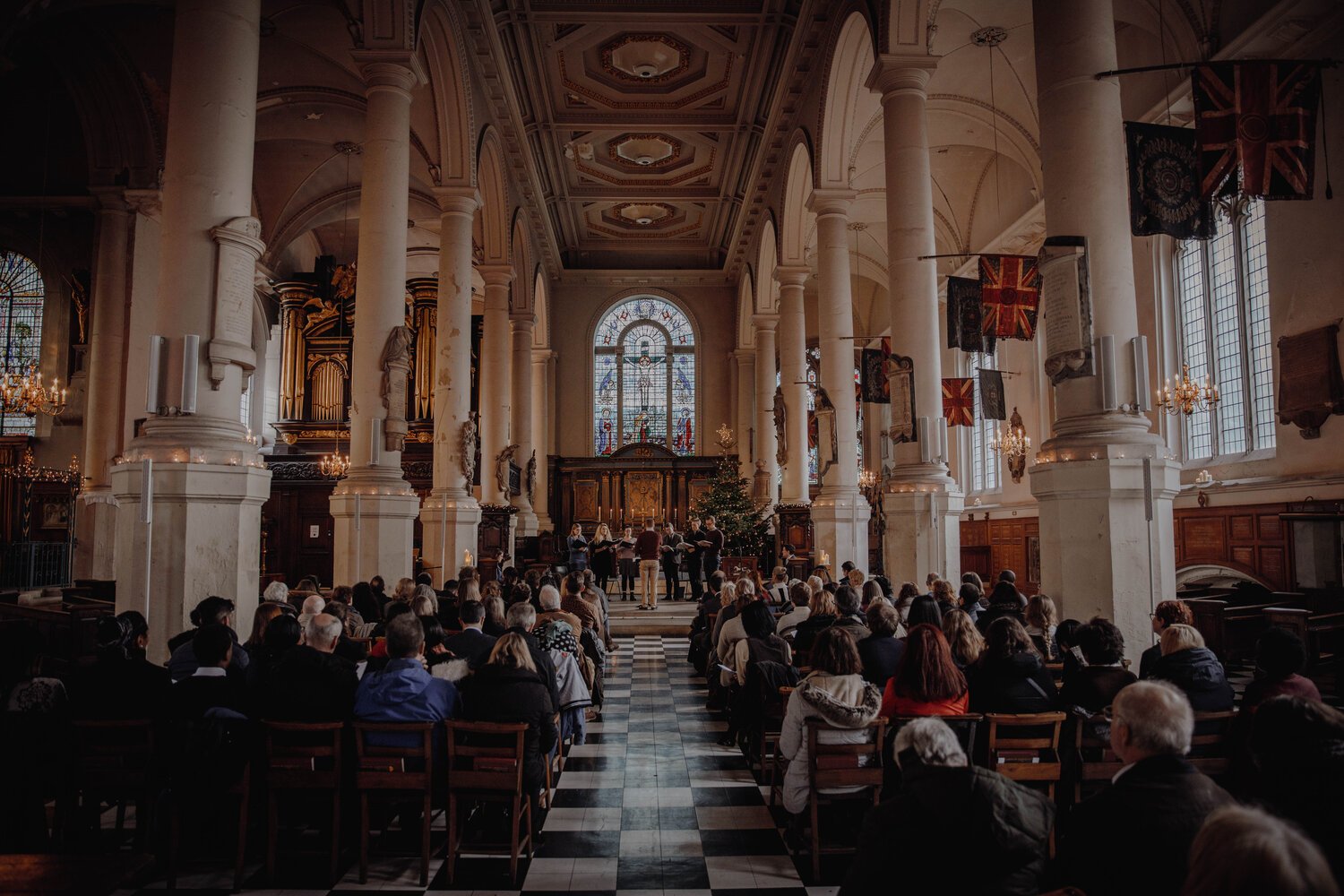
A Choral Celebration Of Queen Mary II, Old Royal Naval College
Performed by Old Royal Naval College Trinity Laban Chapel Choir, The Royal Hospital Chelsea Chapel Choir and the Brandenburg Baroque Soloists.
The Chapel Choirs of the Old Royal Naval College and the Royal Hospital Chelsea combine forces in an historic celebration of the birthday of Queen Mary II (1662-1694).
Instrumental in the founding of the Old Royal Naval College in 1692, now the home of Trinity Laban, Queen Mary was on the throne when the Royal Hospital opened its doors to its Chelsea Pensioners that same year.
https://www.trinitylaban.ac.uk/whats-on/event/a-choral-celebration-of-queen-mary-ii/
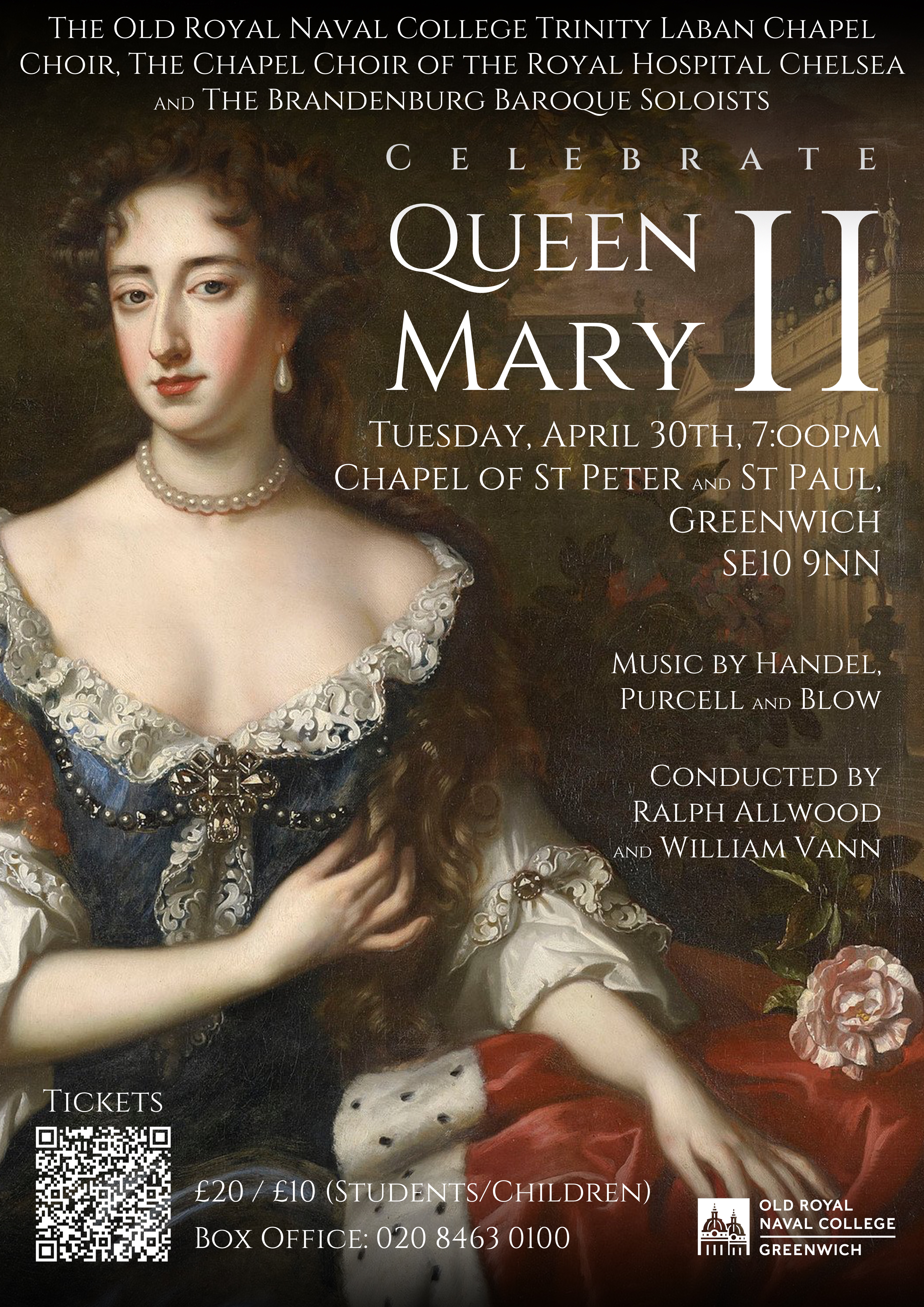
30th April, 7:00pm
Old Royal Naval College Chapel, Greenwich
Choral Course 1: Royal Holloway
The Choral Courses are for singers aged between 16 - 21, many of who are considering University and other Choral Scholarships, but it is by no means a requirement and we welcome singers who just enjoy choral singing and want to improve.
All Choral Course participants make up the choir which prepares for three main performances or choral evensongs. Preparation for choral scholarships and advice on singing beyond school is given a high priority and there are sessions in sight-reading, aural tests and performance, alongside vocal master-classes, a cappella workshops and sessions with visiting conductors.
https://www.therodolfusfoundation.org.uk/choral-course-1
26th July - 2nd August, 2024
Royal Holloway, University of London
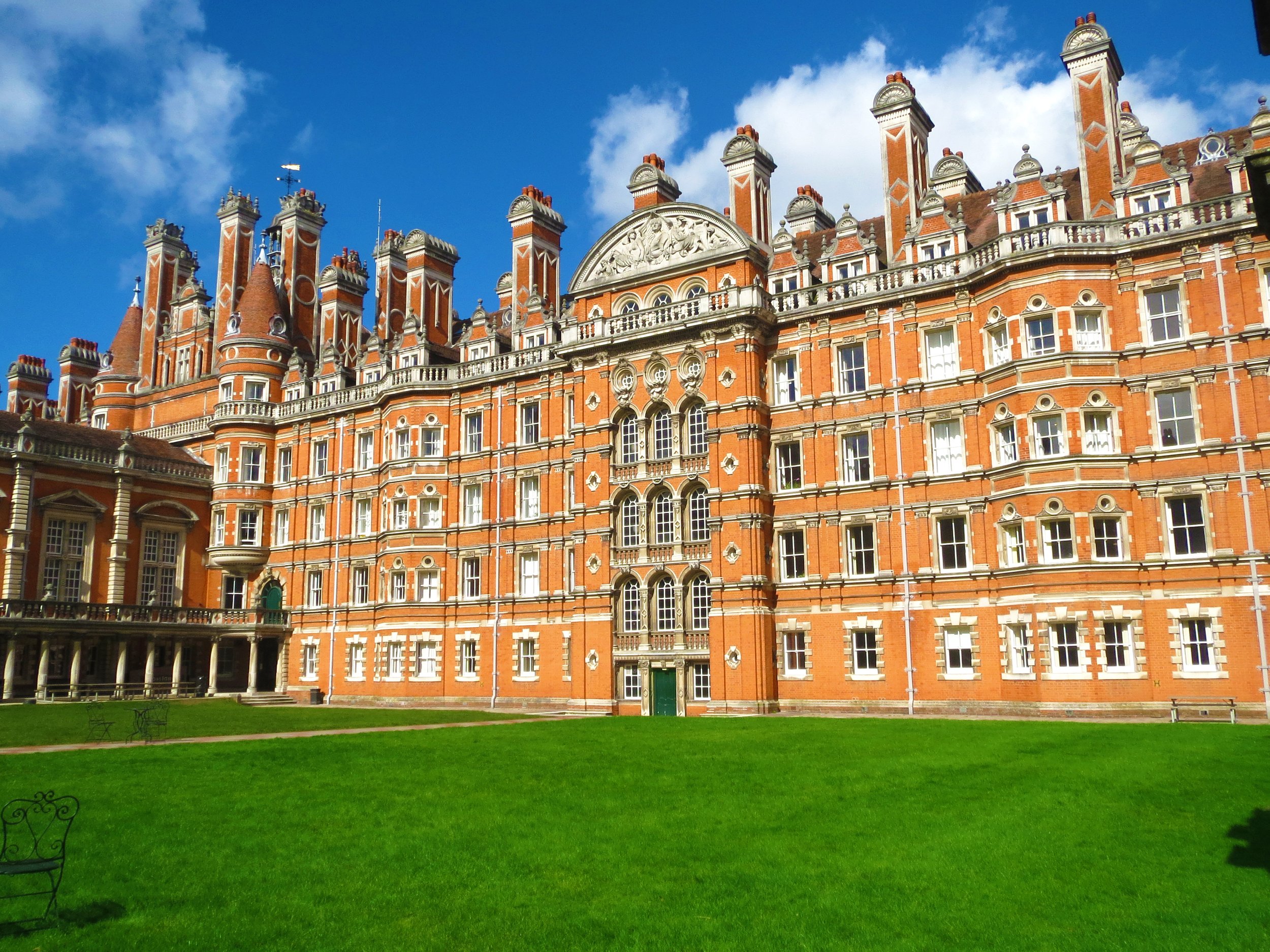
Choral Course 2: Oxford
The Choral Courses are for singers aged between 16 - 21, many of who are considering University and other Choral Scholarships, but it is by no means a requirement and we welcome singers who just enjoy choral singing and want to improve.
All Choral Course participants make up the choir which prepares for three main performances or choral evensongs. Preparation for choral scholarships and advice on singing beyond school is given a high priority and there are sessions in sight-reading, aural tests and performance, alongside vocal master-classes, a cappella workshops and sessions with visiting conductors.
https://www.therodolfusfoundation.org.uk/choral-course-2
4th - 11th August, 2024
St Edward’s School, Oxford

Choral Course 4: York
The Choral Courses are for singers aged between 16 - 21, many of who are considering University and other Choral Scholarships, but it is by no means a requirement and we welcome singers who just enjoy choral singing and want to improve.
All Choral Course participants make up the choir which prepares for three main performances or choral evensongs. Preparation for choral scholarships and advice on singing beyond school is given a high priority and there are sessions in sight-reading, aural tests and performance, alongside vocal master-classes, a cappella workshops and sessions with visiting conductors.
https://www.therodolfusfoundation.org.uk/choral-course-4
12th - 19th August, 2024
St Peter’s School, York
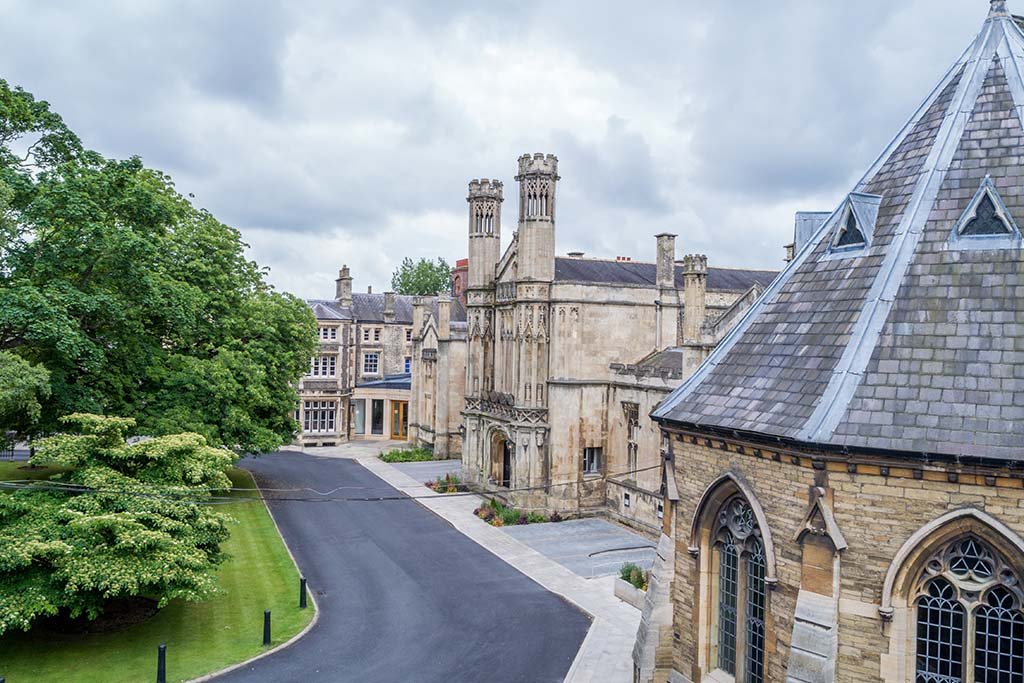
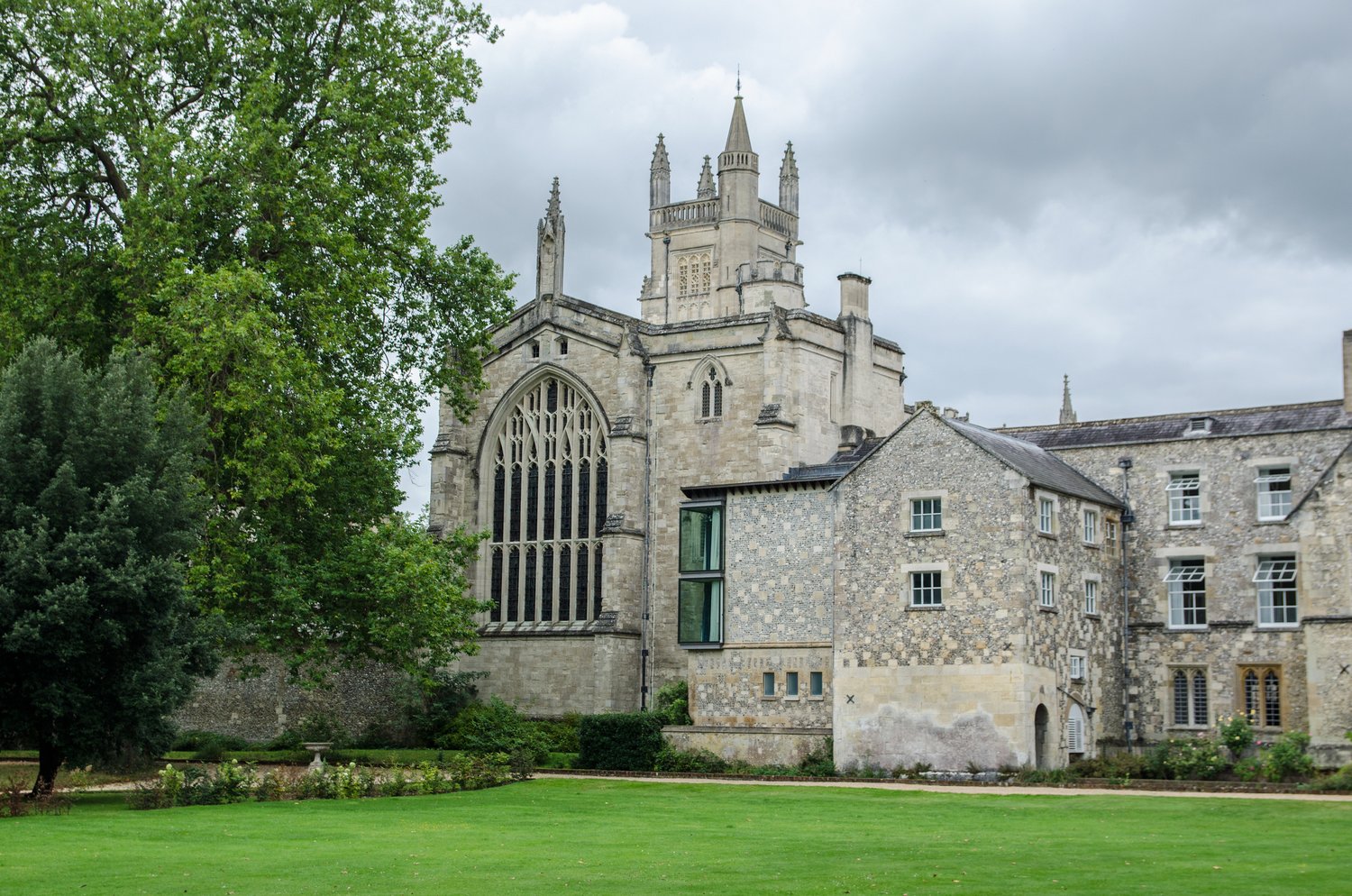
Junior Choral Course 2: Winchester
The Junior Choral Courses offer unique opportunities to children aged 8 - 15 to experience choral singing at a very high level. The course staff are all accomplished singers, and their voices join the young people to enable them to sing some of the great choral repertoire for four voices alongside excellent music written for the students’ higher voices.
https://www.therodolfusfoundation.org.uk/junior-choral-course-2
19th - 25th August, 2024
Winchester College
Weekly Commitments
Sunday: Eucharist Service, Old Royal Naval College, 11:00AM
Monday: Choral Evensong, Old Royal Naval College, 5:30PM Wednesday: Choral Evensong with the Pimlico Musical Foundation, St Gabriel’s Church Pimlico, 5:30PM
View Past Events
Press
Classic FM : Virtual Choral Evensong
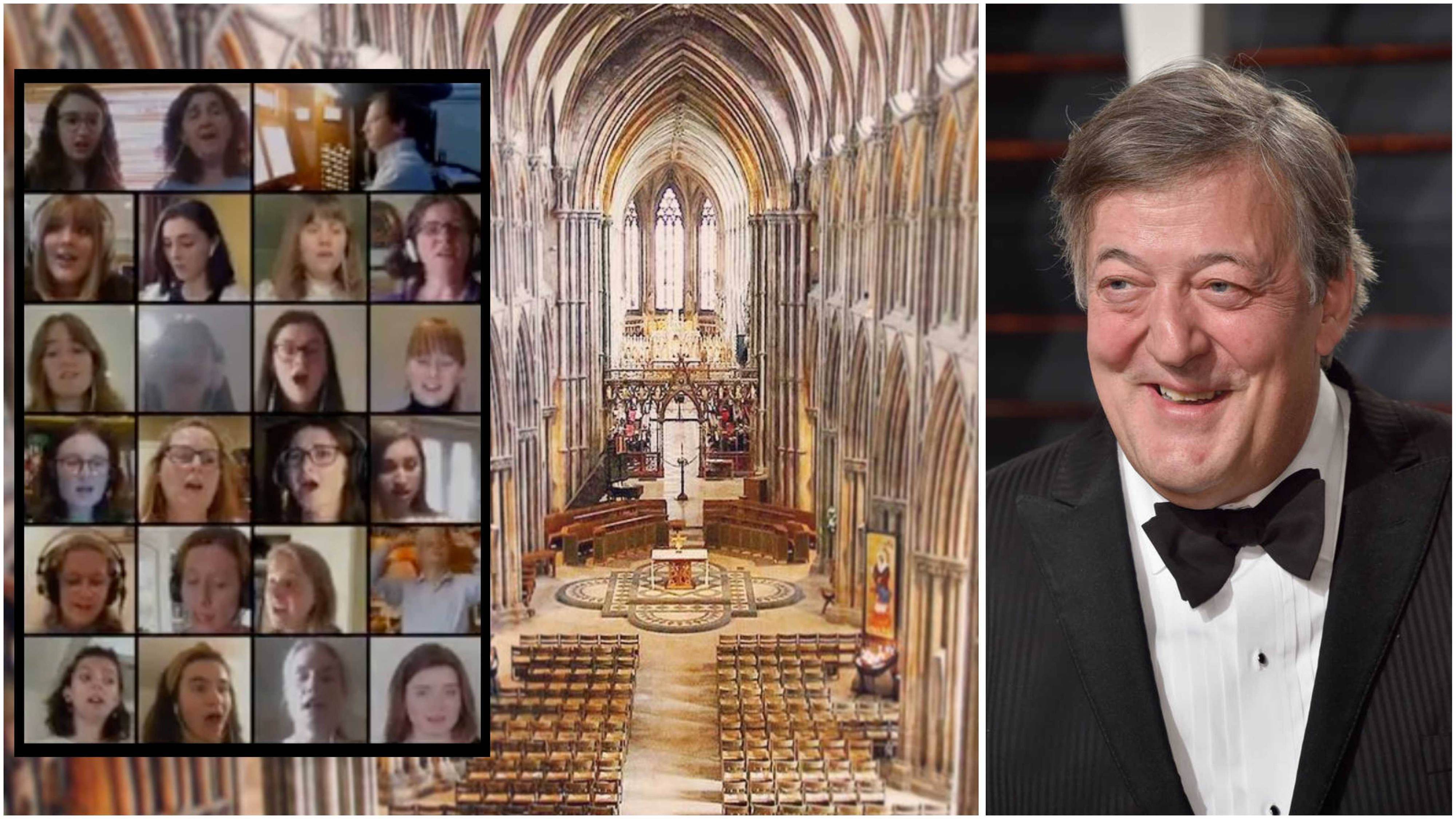
Choristers join Stephen Fry and Alexander Armstrong for virtual choral Evensong service. The timeless church service to soothe the nation and support singers during COVID-19 lockdown.
Read here.
Music Plus Podcast

Listen here.
Independent : “We can have a choir as good as Eton's”
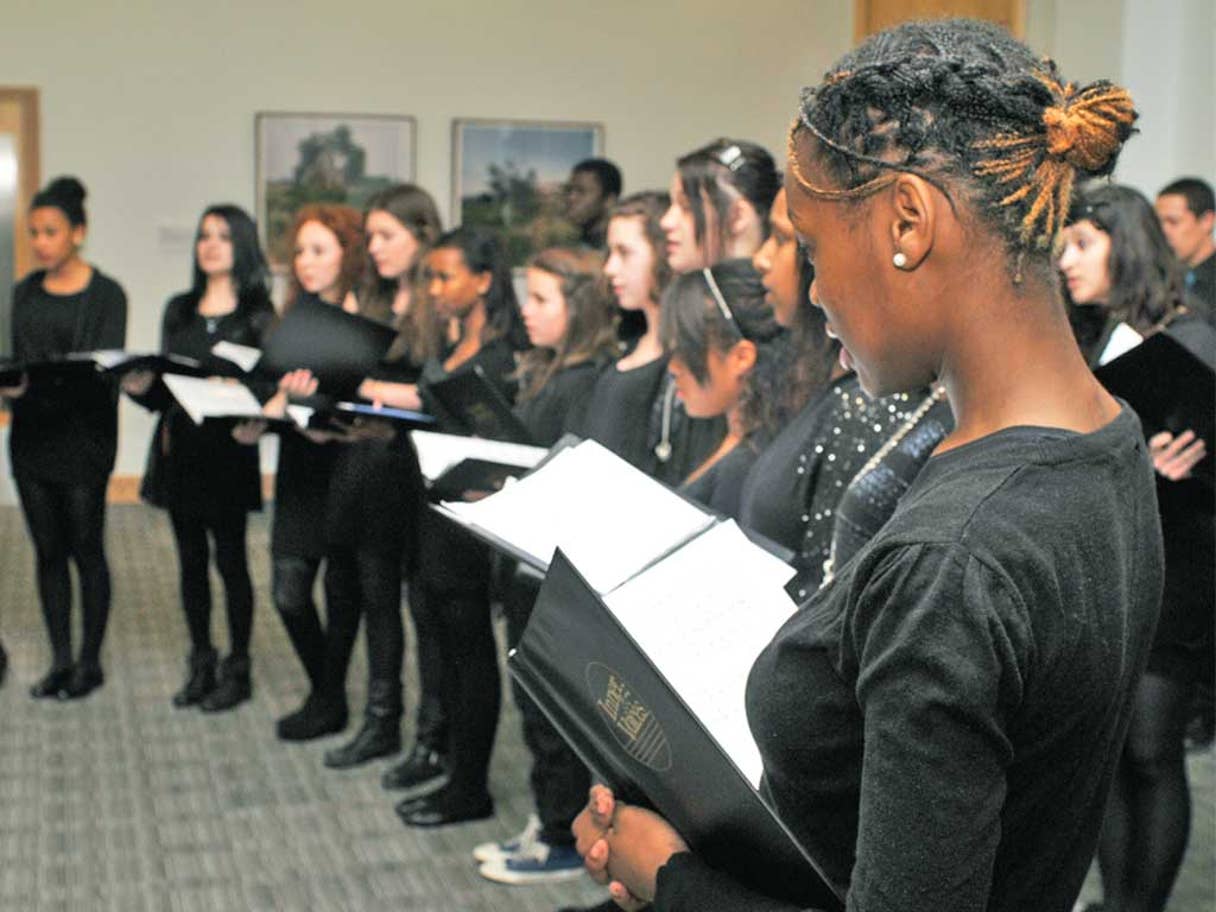
Inner Voices brings together musically gifted singers from inner-city London schools to perform in some of the country's top venues. Alice Jones learns how the ambitious project came about – and hears the remarkable results.
Read here.
Texas State Choirs Today Podcast

Listen here.
Talking Classical Podcast![]()
Annabelle Lee discusses choral directing and music teacher with Ralph Allwood. This episode covers the orgings of the Rodolfus choir, choral courses, and the more recent Pimlico Musical Foundation.
Listern here.
Compositions
Ralph has been a composer for Extreme Music since 1997 providing for film and TV worldwide, chiefly Europe and America and is now represented by Pretty Decent Music. He has been score writer and choir director for several commercials.
- The Holly and the Ivy - (Sheet Music)
- Sweet Was the Song - (Sheet Music)
- Over the Hills - (Sheet Music)
- Ding Dong Merrily on High - (Sheet Music)
- The Gift - (Sheet Music)
- Interlude:Cascades - (Sheet Music)
Recordings
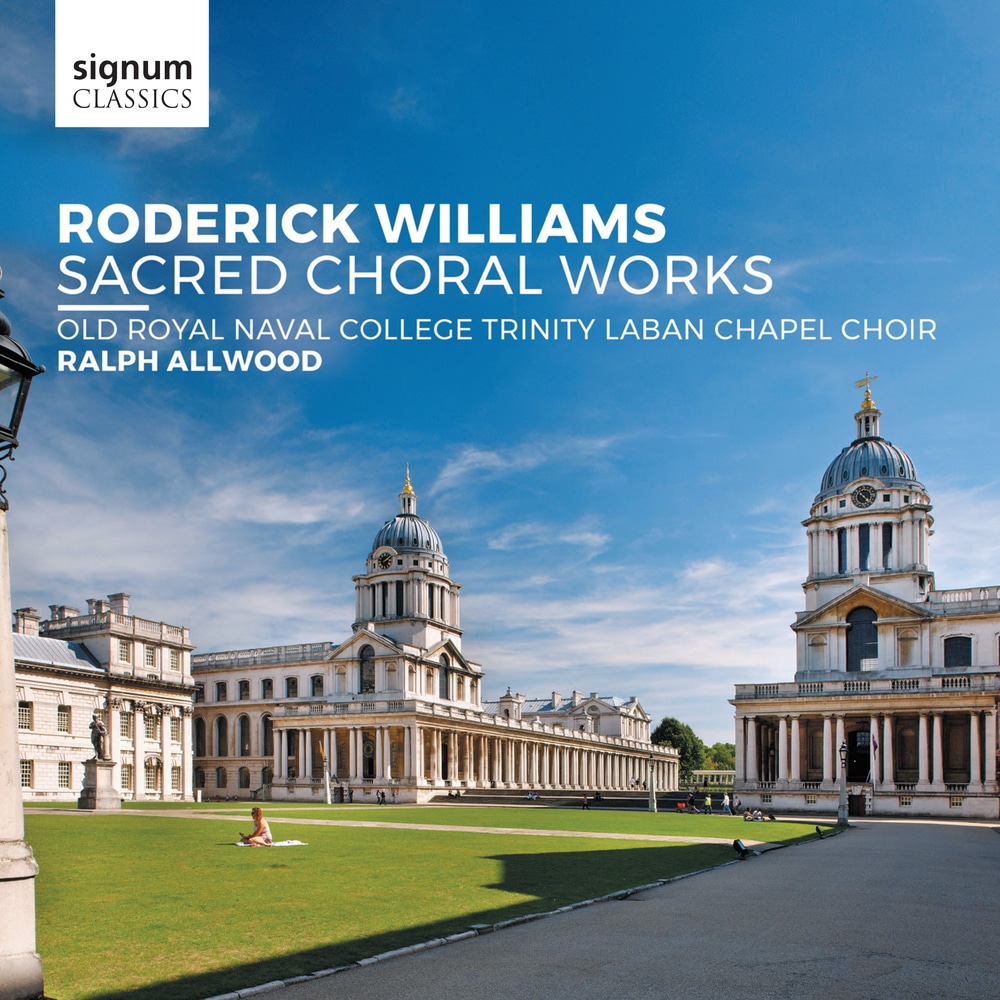
Roderick Williams :
Sacred Choral Works, 2017![]()
Sacred Choral Works, 2017
Rodolfus Choir :
Time and Its Passing, 2015![]()
Time and Its Passing, 2015

Katherine Jenkins with Rodolfus Choir :
Sacred Arias, 2008
![]()

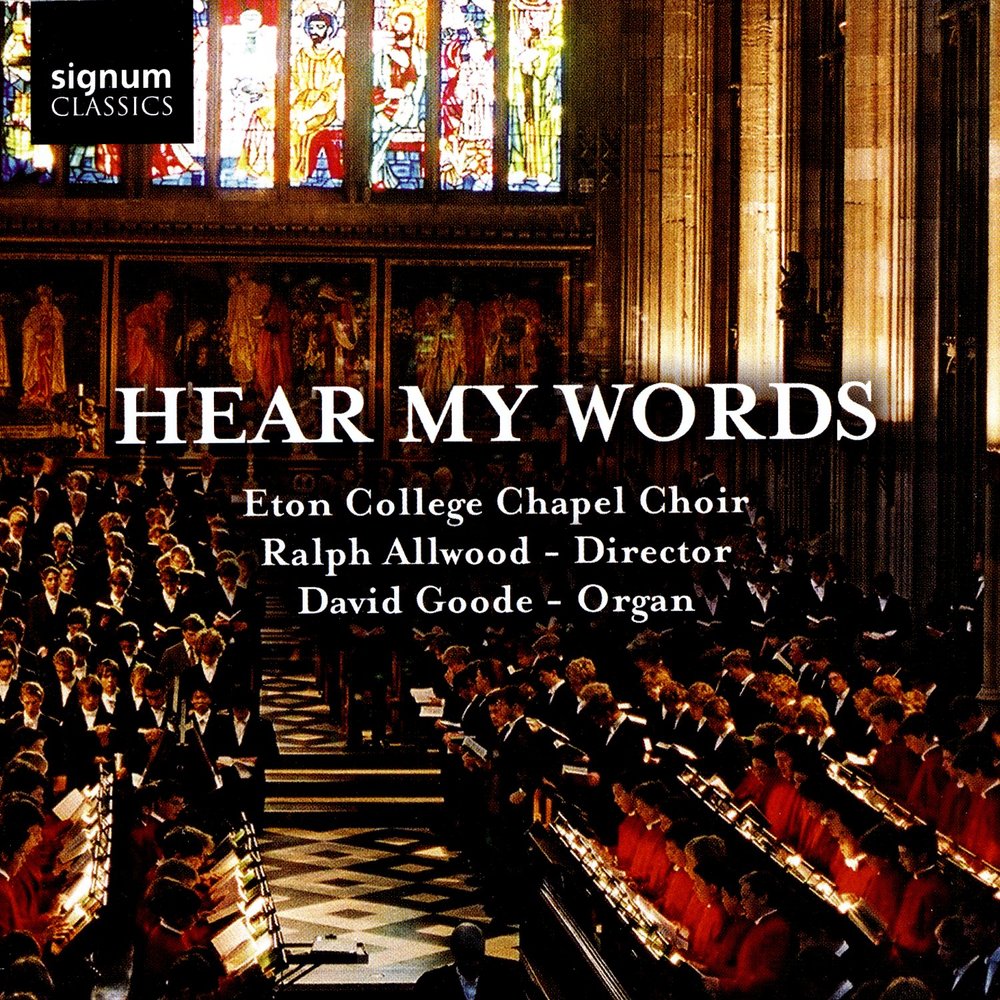
Eton College Chapel Choir :
Hear My Words, 2008
![]()
Arrangements
- J. Pierpont: Jingle Bells: Arr. Ralph Allwood: SATB
- F. Schubert: An Die Musik: Arr. Ralph Allwood: SATB
- By Special Arrangment, Choral Arrangements of Favourite Classics: SATB
- Tchaikovsky: Danse De La Fée-Dragée: Arr. Ralph Allwood and Leo Hussain: SATB
- ABBA: Five ABBA Hits: Arr. Ralph Allwood and Lora Sansun: SSA
- J. Hopkins Jr: We Three Kings: Arr. Ralph Allwood: SATB
Gallery